
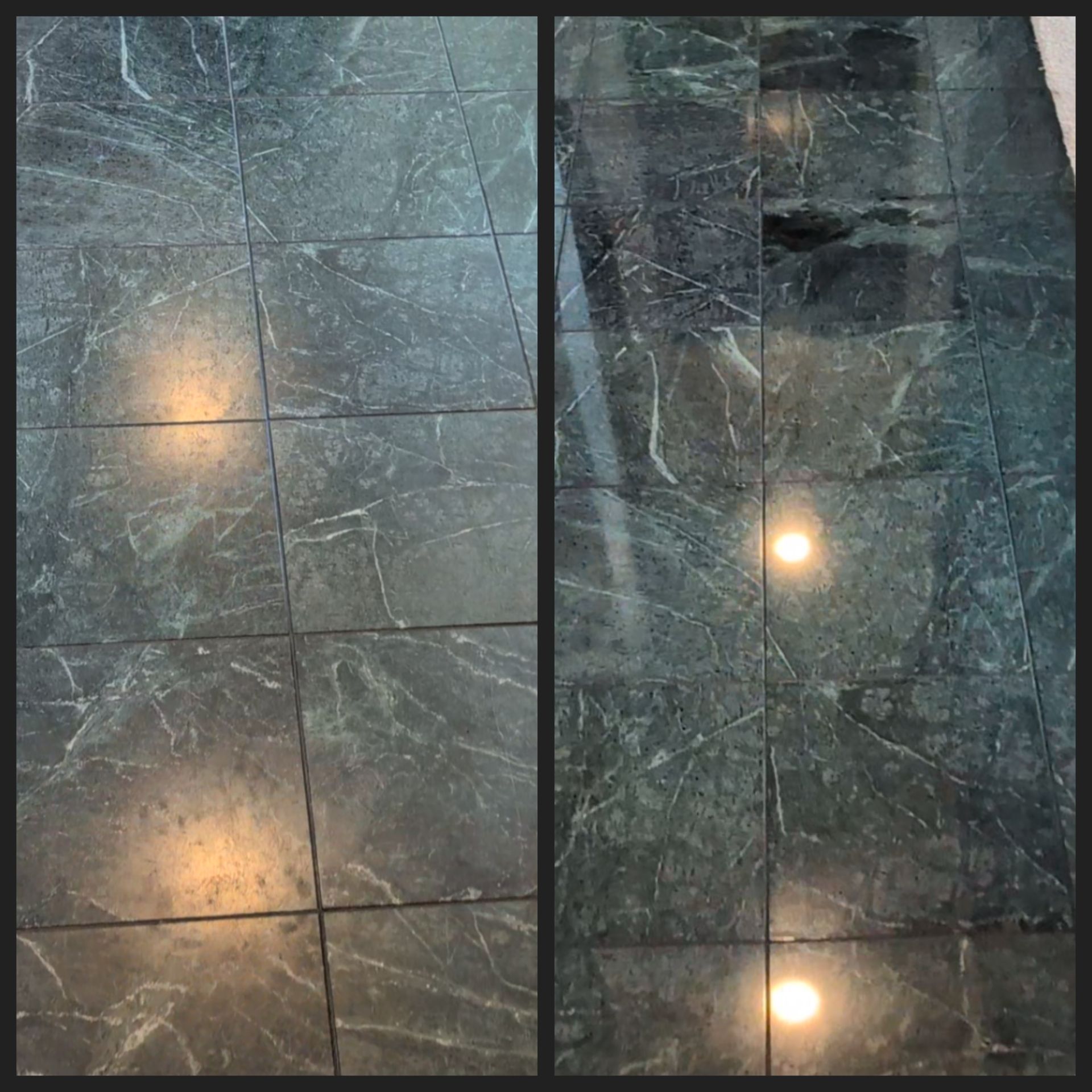
Bring Back the Luster of Marble
Marble Polishing in Commerce for floors, countertops, and ceilings that show etching, dullness, or surface wear
Stone Revival LLC offers marble polishing for residential and commercial clients in Commerce, Michigan who need to restore the reflective finish on marble surfaces that have become dull or damaged. You may notice etching from spills, scratches from foot traffic, or a hazy appearance where the stone no longer reflects light clearly. Marble polishing removes these surface flaws and rebuilds the gloss that defines a well-maintained marble installation.
Marble is softer and more porous than granite, which makes it prone to etching from acidic liquids and wear from regular use. Polishing addresses these issues by grinding away the damaged surface layer and refining the stone with progressively finer abrasives until the finish is smooth and reflective. This process works on marble floors, countertops, vanity tops, wall panels, and even ceilings where the stone has been installed for decorative effect.
If your marble has lost its shine or shows visible damage, reach out to discuss how polishing can restore the stone without removing or replacing it.
The Process Behind Marble Polishing
Polishing begins with an evaluation of the marble to determine the extent of etching, scratching, or lippage between tiles. You will see diamond abrasive pads mounted on rotary or planetary grinders applied in stages, starting with lower grits to remove surface damage and progressing to higher grits that refine the stone to a mirror finish. Water is used throughout to manage dust and keep the stone cool during grinding.
When the work is finished, your marble will reflect light evenly, and etch marks or dull patches will no longer be visible. The surface will feel smooth and consistent, whether you are walking across a polished floor or running your hand along a countertop. Stone Revival LLC adjusts the process based on the type of marble, the condition of the surface, and the finish you want to achieve.
Polishing does not repair chips, cracks, or broken tiles, and it will not remove deep stains that have penetrated below the surface. If your marble has structural issues or staining that goes beyond surface wear, those conditions require separate treatment before polishing can deliver the best results.
Common Questions About Marble Polishing
Marble polishing involves specialized equipment and an understanding of how different marble types respond to abrasion, so it helps to know what the process includes and what it does not.
- What types of marble can be polished? Any marble with a polished or honed finish can be restored, including Carrara, Calacatta, Crema Marfil, and other varieties, as long as the stone is structurally intact.
- How often should marble be polished? You should polish marble when you notice a loss of shine, visible etching, or surface scratches, which may occur every few years depending on the level of use and exposure to acidic substances.
- Why does marble etch more easily than other stone? Marble is calcium-based and reacts chemically with acids found in common household items like lemon juice, vinegar, and some cleaners, which dull the surface on contact.
- How long does it take to polish a marble floor? A typical residential marble floor takes one to two days to polish depending on square footage, the number of rooms, and whether lippage or deep scratches need to be addressed first.
- What preparation is needed before polishing begins? Stone Revival LLC will ask you to clear furniture and other items from the marble surface and ensure access to water and power, especially for larger floor projects in Commerce.
Stone Revival LLC completes marble polishing with careful attention to the specific wear and damage your stone has sustained, so the final surface looks uniform and performs as it should. If you need marble restored, contact the team to arrange an inspection and discuss your project.